
Portugal Rainy Season: 10 Things to Know Before You Go
Discover when the Portugal rainy season starts, which regions stay driest, and how to plan a perfect trip with our monthly rainfall guide and packing tips.
On this page
Portugal Rainy Season: 10 Things to Know Before You Go
The Portugal rainy season runs from November through March, with December and January as the wettest months. Rain falls mostly in short, heavy bursts rather than all-day drizzle. The south stays far drier than the north, so where you go matters as much as when you go.
This guide covers monthly rainfall data, the north-south divide, indoor activity clusters for wet days, and packing essentials. Check the portugal weather by month guide for a full seasonal breakdown before you book.
When is the Rainy Season in Portugal?
The primary wet season spans from November through the end of March. Rainfall peaks in December and January across the north and centre of the country. Atlantic fronts push in from the west, bringing frequent but short-lived rain events.

Even at the height of winter, Portugal sees more sunshine than most of northern Europe. Most days combine a wet morning with a clear afternoon. Temperatures stay mild, averaging 12–17°C / 54–63°F in Lisbon and slightly cooler in Porto.
The shoulder months of October and April mark the transition. October brings the first Atlantic fronts to the north; by April the rain eases considerably. If you can travel in mid-May, you get dry, warm conditions with none of the summer crowds.
Regional Variations: North vs. South Rainfall
Portugal's rainfall gradient runs sharply from northwest to southeast. Porto receives around 1,200mm of rain per year; Lisbon gets roughly 770mm; Faro in the Algarve sees about 500mm. The further south you travel, the drier the winter gets.
Mountains in central Portugal create a rain-shadow effect for the Alentejo plains. The Serra da Estrela range blocks the heaviest Atlantic fronts from pushing inland, protecting the cork-oak plateaus from prolonged wet spells. This is why villages like Évora often feel sunny and crisp even when Porto is socked in for days. Check the algarve weather by month for the full picture of the south's relatively benign winter.
Coastal areas on the western edge bear the brunt of incoming weather systems. The Peniche and Ericeira coastlines face the open Atlantic directly, making them among the wettest spots on the mainland. Inland areas at the same latitude are noticeably drier.
Monthly Climate Guide: Rainfall and Temperatures
Most travel guides list rainfall in millimetres, but what actually disrupts a trip is how many days it rains, not how much falls in total. A city can get the same annual total as another yet spread it across twice as many days. The table below shows both figures for Lisbon, Porto, and Faro so you can judge likely trip disruption accurately.
| Month | Lisbon mm / days | Porto mm / days | Faro (Algarve) mm / days |
|---|---|---|---|
| January | 108mm / 11d | 158mm / 14d | 80mm / 9d |
| February | 97mm / 10d | 130mm / 12d | 67mm / 8d |
| March | 75mm / 9d | 116mm / 12d | 55mm / 7d |
| April | 63mm / 9d | 113mm / 11d | 32mm / 5d |
| May | 42mm / 7d | 85mm / 9d | 22mm / 4d |
| June | 17mm / 4d | 48mm / 6d | 7mm / 2d |
| July | 3mm / 1d | 23mm / 2d | 1mm / 0d |
| August | 4mm / 1d | 31mm / 3d | 2mm / 0d |
| September | 30mm / 5d | 75mm / 7d | 16mm / 3d |
| October | 77mm / 9d | 126mm / 11d | 63mm / 6d |
| November | 107mm / 11d | 162mm / 13d | 85mm / 9d |
| December | 112mm / 12d | 181mm / 14d | 90mm / 10d |
Two things stand out. First, even in Porto's wettest months (November–January), about half the days are rain-free. A two-week winter trip will almost certainly include several clear days, not two solid weeks of rain. Second, the Algarve in July and August is essentially bone dry — if your trip is beach-focused, the south in summer has near-zero rain risk.
Even in Porto's rainiest months, roughly half the days are rain-free. Scheduling flexible, indoor-friendly activities on arrival day gives you the best chance of catching clear afternoons for outdoor sightseeing.
Why Porto is Significantly Rainier Than Lisbon
Porto's northern latitude puts it directly in the path of Atlantic low-pressure systems tracking northeast across the ocean. Westerly winds carry moisture-laden air off the sea, and the Serra do Marão mountain range to the east traps that moisture over the city rather than letting it disperse inland. The result is about 150 rainy days per year — roughly 12 to 13 wet days every month on average.
Lisbon sits further south and benefits from more stable Mediterranean weather patterns. The capital's position also means Atlantic fronts often weaken before reaching it. You can visit Porto on the best time to visit porto page for a month-by-month guide to avoiding the worst of the wet.
Humidity makes Porto's winter feel colder than the thermometer suggests. Old granite buildings absorb moisture and rarely have central heating. At 14°C / 57°F in January, the damp chill in a stone-walled guesthouse feels significantly sharper than the same temperature in a dry-climate city. Pack warm, moisture-wicking base layers and accept that the cold is damp cold.
Best Indoor Activities for Rainy Days in Portugal
Rain rarely shuts Portugal down. The country has enough world-class indoor culture to fill several wet days without leaving the city centre. In Lisbon, the Belém neighbourhood clusters the Museu de Arte Popular, the Museu dos Coches (the world's largest collection of royal carriages), and the Mosteiro dos Jerónimos — all within a short walk and sheltered by wide arcaded walkways. The MAAT contemporary art museum on the riverside adds a modern counterpoint.
Porto on a rainy day is best spent across the river in Vila Nova de Gaia, where the port wine lodges line the hillside. Most lodges — Graham's, Taylor's, Sandeman — offer guided cellar tours for around €15–20 per person, finishing with a tasting. The tours last 45 to 60 minutes and are entirely indoors. You can check the best time to visit douro valley page to plan a full valley day around the weather.
In Sintra, the Palácio Nacional de Sintra and the Museu do Brinquedo (toy museum) offer dry shelter even on the foggiest days. The hilltop palaces like Pena and Quinta da Regaleira are technically outdoors, but their interiors are substantial enough to fill an hour each regardless of the weather outside.
- Belém museum cluster (Lisbon): Mosteiro dos Jerónimos, Museu dos Coches, MAAT
- Port wine lodges (Vila Nova de Gaia, Porto): guided tours from €15, fully indoors
- Sintra palace interiors: Palácio Nacional de Sintra open year-round
- Livraria Bertrand (Lisbon, Rua Garrett): world's oldest operating bookshop, free entry
- Museu Nacional do Azulejo (Lisbon): tile art, 16th–21st century, €5 entry
Visiting the Douro Valley During the Rainy Season
The Douro Valley's microclimate is notably drier than Porto's coast, thanks to the Serra do Marão blocking maritime air. January and February here bring cold nights — temperatures can drop to 4°C / 39°F — but clear skies are common by midday. The terraced vineyards turn bare and dramatic; the hillsides are free of the tourist buses that crowd them in October.
River cruise lines typically pause from January through early March for maintenance and low water levels. Small group wine-tasting tours to the quintas (wine estates) run year-round, though you should book directly with estates like Quinta do Crasto or Quinta da Roca as some reduce opening hours in January. A day trip from Porto by hire car takes about 90 minutes on the A4/IP4 motorway.
Fog in the valley in early morning is common in December and January. It often burns off by 10:00, revealing still, silver-lit terraces that photographers actively seek out. Arriving after 09:30 gives you the clearest light for the first scenic viewpoints near Pinhão.
What to Pack for the Portuguese Wet Season
The traditional cobblestones in Lisbon, Porto, and Sintra become genuinely dangerous when wet. Smooth-soled shoes or fashion trainers cause falls — use waterproof footwear with a defined rubber sole. This is the single most common complaint from first-time winter visitors who ignored packing advice.
Atlantic gusts routinely break lightweight umbrellas. Bring a compact windproof umbrella rated for 60+ km/h winds, or use a waterproof shell jacket instead. Breathable wool or technical fleece mid-layers handle the humid cold far better than thick cotton.
- Waterproof shoes or boots with rubber grip — for cobblestone streets
- Windproof compact umbrella or waterproof shell jacket
- Merino wool or technical fleece base layers
- Light down or synthetic insulated mid-layer for evenings in Porto and Sintra
- Small waterproof day bag to keep electronics and documents dry
Sintra has its own persistent microclimate — fog and light drizzle linger here even on otherwise dry days, driven by warm ocean air hitting the cold Serra de Sintra hills. Pack a separate packable rain layer specifically for day trips there, even if you are visiting in a relatively dry month like September or October.
The Green Season: Benefits of Off-Peak Travel
Locals call the rainy months the green season for good reason. The dry Alentejo cork-oak plains and the brown summer hillsides of the Algarve transform into lush rolling green landscapes by December. The wildflower bloom peaks in February and March, especially along the Via Algarviana trail and the Costa Vicentina. Winter light at low sun angles is soft and photogenic in a way that the harsh summer midday sun simply is not.
Winter is also peak season for world-class surfing. Nazaré draws spectators from around the world for its record-breaking big waves, which arrive with the Atlantic swells from November to February. Ericeira and Peniche are active all winter for intermediate and advanced surfers. Hotel rates in both Lisbon and Porto drop by 30–50% versus July peaks. Staying in a historic pousada that costs €300 per night in summer often runs €140–160 in January.
You can visit best month to visit portugal for a detailed cost-and-crowd comparison across every month if you want to optimise for value.
What's Closed in Low Season: Planning Tips
Water parks across the Algarve — Slide & Splash, Aqualand, Aquashow — close from late October and reopen in April or May. Small beach bars in remote fishing villages like Sagres often shut entirely from November. Boat tours to the Benagil Cave run year-round but are frequently cancelled in January and February due to high Atlantic swells. Always check operator websites the morning of your booking, not weeks in advance.
Douro river cruise lines typically pause for maintenance in January and occasionally February. Some mountain hiking trails close after heavy rainfall due to landslip risk. Call or email smaller regional museums a day ahead — opening hours in rural Portugal contract noticeably outside summer.
Boat tours to the Benagil Cave run year-round but are frequently cancelled in January and February due to high Atlantic swells. Always check the operator's website the morning of your booking rather than days in advance.
How the Atlantic Ocean Influences Portugal's Weather
The Azores High — a semi-permanent high-pressure cell sitting over the mid-Atlantic — dictates Portugal's summer weather. From June to September it expands northward, blocking storm tracks and delivering the reliable dry, sunny conditions the Algarve is famous for. In winter the Azores High weakens and retreats southward, opening the door to the Atlantic fronts that drive the rainy season.
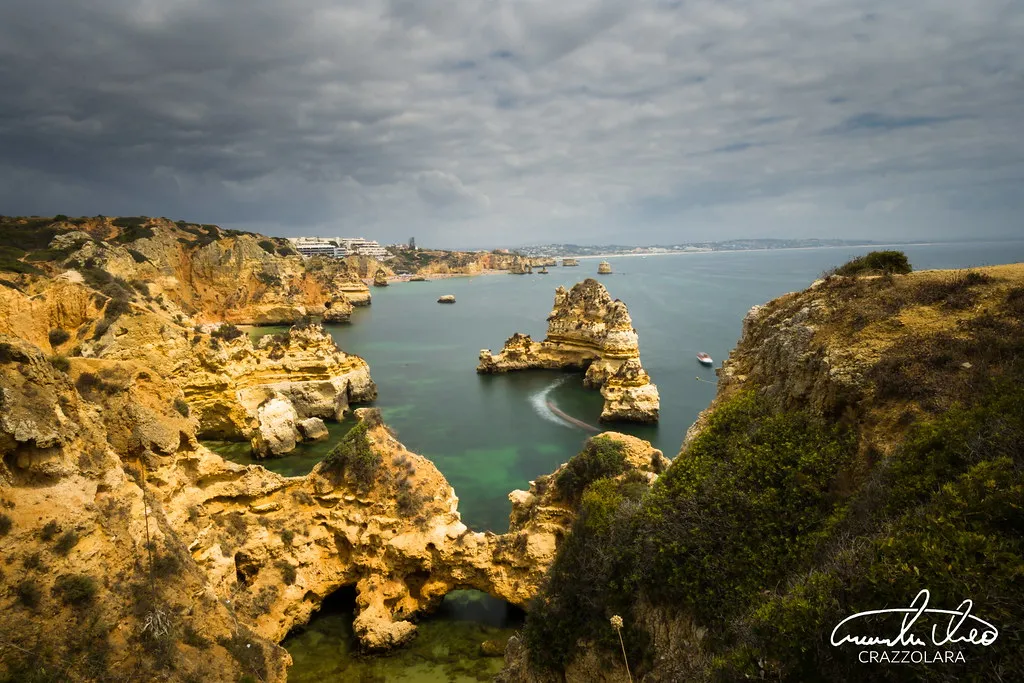
This Atlantic influence also keeps Portugal's temperatures unusually mild for its latitude. Winter lows rarely fall below 5°C / 41°F in coastal cities. The same system makes Portuguese summers hotter inland than on the coast: the Alentejo and interior Algarve regularly hit 38–40°C / 100–104°F in July, while Lisbon and Porto stay 5–8°C cooler thanks to the sea breeze.
Portugal's climate sits at the boundary between Mediterranean (dry, hot summers) and maritime Atlantic (mild, wetter winters). Understanding this hybrid means you can predict conditions relatively well: if an Atlantic front is forecast, the north will be wetter and windier; if the Azores High is holding, even January days can be warm and sunny.
Frequently Asked Questions
When is the best time to visit Portugal to avoid rain?
The best time to avoid rain is from June to mid-September. Mid-May to mid-June is also excellent for dry weather and mild temperatures. Most travelers find these months the most reliable for outdoor activities.
Is Porto rainier than Lisbon?
Yes, Porto is significantly rainier than Lisbon due to its northern location. It receives about 1,200mm of rain annually compared to Lisbon's 770mm. Atlantic fronts hit the northern coast more frequently throughout the winter.
Does it rain all day during the Portugal rainy season?
It rarely rains all day in Portugal even during the peak wet season. Most rainfall comes in heavy, short bursts followed by sunny intervals. Discover more in this lisbon in winter off-season guide for indoor activity ideas.
Is the Algarve warm in the rainy season?
The Algarve remains the warmest part of mainland Portugal during the winter. Highs average around 16°C / 61°F even in January. While it does rain, the south receives much less precipitation than the north.
The Portugal rainy season is manageable with the right region choice, a solid packing list, and a few indoor anchors for the wet days. The south stays dry enough for sightseeing all winter. The north rewards patience with dramatic green landscapes and empty streets.
Whether you are chasing big waves in Nazaré, wine tastings in Gaia, or simply cheaper hotel rates, winter Portugal consistently over-delivers for the effort. Plan around the regional data, not the headline "rainy season" label, and you will find it far less disruptive than you feared.