Hottest Month in Portugal: Summer Weather & Travel Guide
Discover the hottest month in Portugal, regional temperature breakdowns, and essential summer travel tips for the Algarve, Lisbon, and the Alentejo.
On this page
Hottest Month in Portugal: Summer Weather & Travel Guide
August is the hottest month in Portugal, with average highs of 35°C / 95°F inland and around 29°C / 84°F on the Algarve coast. July runs a close second and is increasingly hard to distinguish from August after back-to-back record summers. Most visitors planning a summer trip want to know exactly how hot it gets, which regions to avoid at midday, and whether the heat is manageable. This guide answers all three with specific temperature data, regional breakdowns, and practical advice for 2026.
If your priority is beach time with tolerable heat, the coast in late June or early September edges out August. If peak summer is your only window, staying near the Atlantic makes a real difference. The best month to visit Portugal depends heavily on whether you are heading to the coast or planning inland excursions. Either way, understanding the regional temperature differences will shape every decision from accommodation to daily itinerary.
What Is the Hottest Month in Portugal?
August is officially the hottest month in Portugal according to IPMA (Instituto Português do Mar e da Atmosfera) historical records going back to 1931. The national average maximum temperature in August sits at around 30°C / 86°F, but that figure masks enormous regional variation. Inland areas in the Alentejo and the Tagus Valley consistently hit 38–42°C / 100–108°F during heat waves, while the Algarve coast stays in the 28–31°C / 82–88°F range thanks to the Atlantic. Porto in the northwest barely cracks 27°C / 81°F on its hottest days.

July and August together form Portugal's official summer peak, and in recent years the gap between them has narrowed. The summer of 2023 saw Portugal register 47.4°C / 117°F near Coimbra — still the European temperature record for the country. Heat waves now arrive earlier in the season, and June heat events have become common. For planning purposes, treat late July through August as interchangeable in terms of heat intensity.
Nighttime temperatures in August stay warm along the coast at around 18–20°C / 64–68°F, which makes outdoor dining pleasant. Inland cities like Évora cool far less, often holding above 22°C / 72°F until midnight. If you are sensitive to heat at night, a coastal base in August makes a meaningful difference to sleep quality. Air conditioning is standard in most hotels and many mid-range apartments now, though older guesthouses in rural areas may not have it.
August vs July: How the Two Hottest Months Actually Compare
Most people assume August is dramatically hotter than July, but the real-world difference is smaller than the calendar suggests. In Lisbon, July averages 28°C / 82°F and August averages 29°C / 84°F — a one-degree gap that most visitors would not notice. The bigger difference is sea temperature and crowd density. Ocean water along the west coast peaks at around 20°C / 68°F in late August compared to 17°C / 63°F in early July. If swimming is the priority, late August gives you the warmest water Portugal's Atlantic coast can offer.
Crowd levels and prices diverge more sharply than temperature. August is when Portuguese families take their own holidays, which pushes beach towns like Albufeira, Cascais, and Nazaré to maximum capacity. Car rentals and Algarve accommodation routinely cost 40–60% more in August than the same week in July. July already attracts heavy international tourism, but you have a better chance of securing last-minute accommodation and uncrowded beach spots in early July than at any point in August.
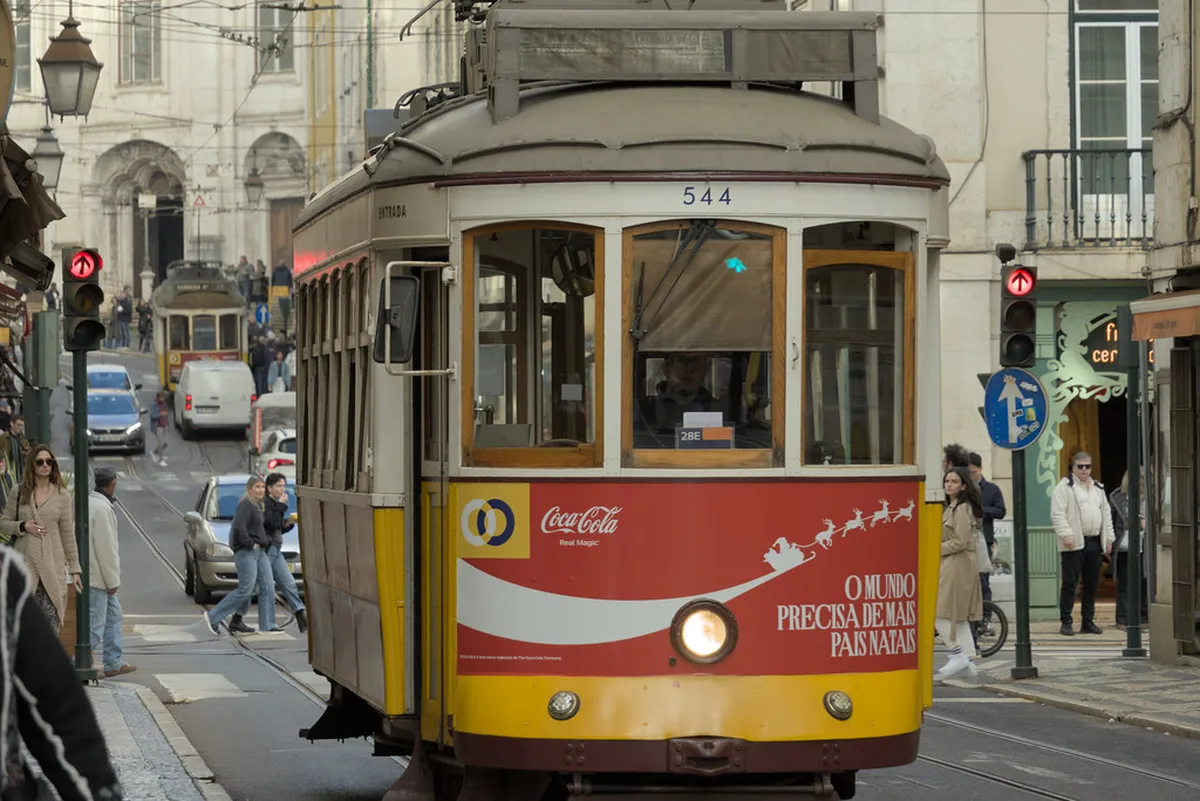
For city sightseeing — Lisbon, Porto, Sintra — July is actually the better pick. The lower heat and slightly thinner crowds make walking the steep cobbled streets more manageable. August in Lisbon can feel overwhelming: packed trams, queues of 45+ minutes at Belém Tower, and midday temperatures that send most visitors indoors between 12:00 and 16:00. If you are committed to a summer trip focused on cities rather than beaches, aim for the first three weeks of July.
Regional Temperature Breakdown: What to Expect Across Portugal
Portugal's heat is not uniform, and understanding the regional spread can save you from a miserable trip. The north — Porto, Braga, Viana do Castelo — is the coolest zone in summer, with August highs averaging 25–27°C / 77–81°F and Atlantic fog common in the mornings. The Douro Valley interior bucks that trend; sheltered by mountains, it bakes in August and regularly hits 36°C / 97°F during harvest season. The Portugal weather by month guide covers the full annual picture for each of these regions.
Central Portugal around Lisbon sits in the middle band: hot and dry, cooled slightly by the Tagus estuary and westerly winds known locally as the Nortada. This afternoon sea breeze typically arrives around 14:00–15:00 and drops the perceived temperature by 3–5 degrees, making Lisbon liveable even in August. Without it — which happens during heat waves — the city becomes genuinely stifling. The Setúbal Peninsula south of Lisbon loses the Nortada and heats up fast; Sesimbra and Arrábida beaches are stunning but exposed.
The Alentejo is Portugal's heat epicentre. Évora, Beja, and Portalegre sit on a flat, treeless plateau that acts as a heat trap. August averages here run 37–40°C / 99–104°F and heat wave peaks have exceeded 45°C / 113°F. The Algarve, despite its southern latitude, is actually more comfortable in summer because a separate Atlantic-facing coastline keeps temperatures in the 28–30°C / 82–86°F range. Check the Algarve weather by month for resort-level detail before booking your beach holiday. The Tagus Valley corridor between Santarém and Abrantes — rarely discussed in travel guides — consistently rivals the Alentejo for peak heat and is worth avoiding for inland touring in August.
Humidity and What the Heat Actually Feels Like
Portugal's summer heat is predominantly dry, which makes it feel more tolerable than equivalent temperatures in Southern Spain or Southeast Asia. Humidity in Lisbon and the Alentejo in August runs at 30–40%, meaning sweat evaporates quickly and 35°C / 95°F feels like a manageable 32°C / 90°F in the shade. The exception is the southern Algarve coast where humidity creeps up to 55–65% due to proximity to the Mediterranean airstream; the same temperature feels noticeably stickier there than inland.
The Leveche wind (also called the Leste in Portugal) is the wild card. It blows in from North Africa carrying hot, very dry air and can push temperatures up by 5–8°C / 9–14°F in a few hours. During a Leveche event, a day forecast at 36°C / 97°F can hit 43°C / 109°F by mid-afternoon. The IPMA publishes next-day Leveche alerts on its website; checking the forecast the evening before is a habit worth adopting if you are doing any outdoor touring. These events are most common in July but can occur in August and even late June.
UV intensity in summer Portugal is severe. The UV index regularly reaches 9–11 between 10:00 and 16:00, which is in the extreme category — skin burns in under 20 minutes for fair-skinned visitors. The dry air tricks many tourists into underestimating how fast they are burning because they are not sweating heavily. Reapplication of SPF 50+ every 90 minutes is a practical necessity, not a suggestion, if you are spending time on open beaches or cobblestone plazas.
Portugal's dry summer air means you won't feel sweaty even when the UV index is at its peak (9–11 between 10:00 and 16:00). Reapply SPF 50+ every 90 minutes regardless — fair-skinned visitors can burn in under 20 minutes on open beaches or plazas.
Wildfires and What They Mean for Summer Travel
Wildfires are a real operational concern for summer travel in Portugal that most travel guides underplay. Portugal has one of the highest wildfire frequencies in Europe, and the peak fire season runs from July through September — overlapping exactly with the hottest month. Fires are most common in central Portugal (the Pinhal Interior around Pedrógão Grande), the Algarve hills behind the coast, and the Douro Valley slopes. In bad years, smoke reduces air quality in Lisbon and Porto for days at a time.
The practical impact on tourism is uneven. Coastal beach holidays in the Algarve are almost never directly affected because fires burn in the eucalyptus forests inland. Hiking trips in the Serra de Monchique hills or the Parque Natural de Sintra-Cascais carry more real-world risk in August. Some national park trails impose access restrictions during elevated fire risk periods (níveis de alerta laranja and vermelho), and these closures can happen with 24 hours' notice. If hiking is a key part of your trip, May–June or late September is a far safer window.
National park trail closures during orange and red fire alerts (níveis de alerta laranja and vermelho) can be announced with as little as 24 hours' notice in July and August. If hiking in Serra de Monchique or Parque Natural de Sintra-Cascais is a key part of your trip, check ICNF alerts the night before and confirm your operator has a rescheduling policy.
Portugal's government activates the Plano de Contingência de Ondas de Calor (heat wave contingency plan) when temperatures are forecast to exceed defined thresholds for three or more days. This triggers cooling centres across cities, and outdoor tour operators — particularly walking tours and cycling excursions — are advised to suspend morning departures during red alerts. In 2024, this affected a handful of Lisbon city tour operators for about a week in August. Before booking activity-heavy packages, check whether the operator has a cancellation/rescheduling policy for heat alerts.
Is August Too Hot to Visit Portugal?
The answer depends almost entirely on where you are staying. On the Algarve coast or in Cascais and Estoril near Lisbon, August is hot but manageable — afternoon breezes, cool water, and good infrastructure make it a perfectly enjoyable beach holiday. Inland, the calculus changes. A three-day road trip through the Alentejo in August requires genuine planning: early starts (before 09:00), a hard stop between 12:00 and 17:00, and an absolute commitment to hydration. Sightseeing Évora's Roman temple at 14:00 in August is a different experience than the same visit in October.
Follow the local rhythm. Portuguese people have long adapted to August heat through a later daily schedule: breakfast at 08:00, morning errands done by 11:00, long lunch and rest from 13:00 to 16:00, then a second productive period from 17:00 through the cool evening. Restaurants in Lisbon and Porto fill up again at 20:00 and stay busy until midnight. Visitors who try to sightsee through the midday heat consistently report it as the worst part of their trip; those who embrace the afternoon rest rarely complain about the temperature.
The dry heat in Portugal is generally more manageable than tropical humidity, but the intensity is real. Elderly travellers, young children, and anyone with cardiovascular conditions should be cautious during heat wave events. Portugal's national health service runs dedicated heat line services (SNS 24, tel 808 24 24 24) during official heat alerts. Hospitals in tourist areas have seen a measurable uptick in heat-related admissions in August in recent years — another reason to take the midday heat seriously rather than push through it.
Best Places to Be in Portugal During the Hottest Month
If you want the warmest water and the longest beach days, the eastern Algarve between Tavira and Vila Real de Santo António is the sweet spot. This stretch faces south and east rather than directly into the Atlantic, so the sea is calmer and a few degrees warmer than the exposed west-facing Sagres coastline. The Ria Formosa lagoon system here produces shallow, sun-warmed water ideal for families. Tavira is also a far less hectic town than Albufeira or Lagos in August. The best time to visit Lisbon guide has context on why coastal positioning matters for summer comfort.
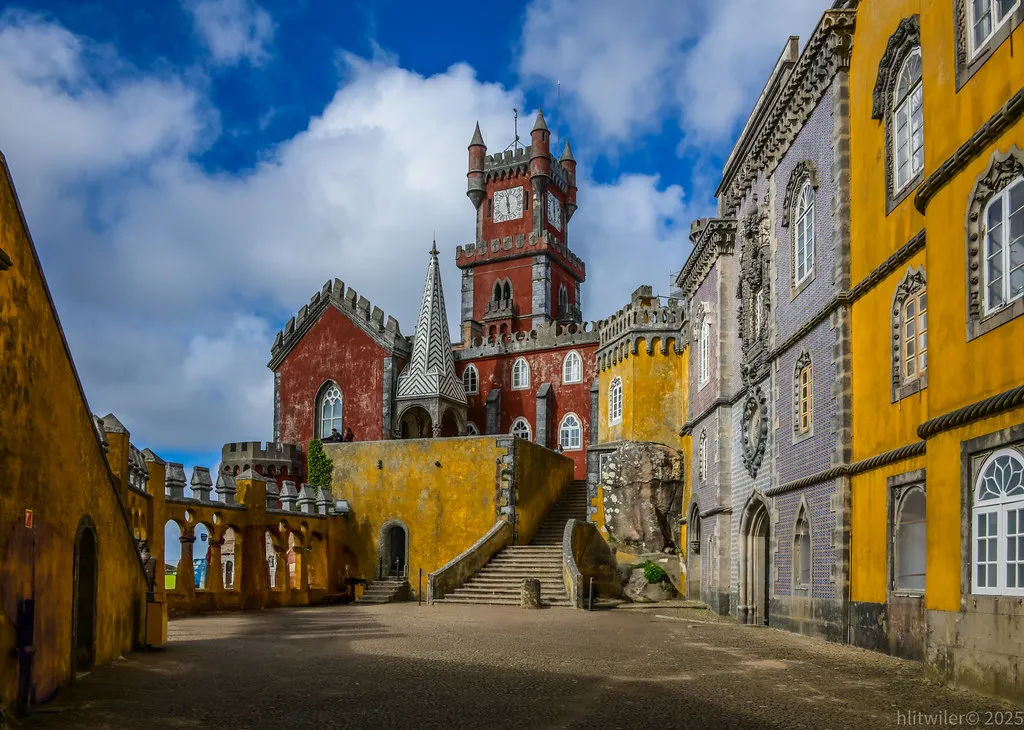
Lisbon in August works best if you use it as an evening city and a morning city. The Nortada breeze makes afternoons genuinely pleasant compared to what you find 100 km inland. Sintra, 40 minutes by train, sits at higher elevation in a microclimate with frequent morning cloud cover that keeps summer temperatures 4–6°C cooler than Lisbon. It is one of Portugal's most visited day trips and even better in the heat because the palace gardens and forested hillsides provide real shade. Arrive at Pena Palace before 10:00 in August to beat both the crowds and the heat.
Porto is the most comfortable large city in Portugal during summer, full stop. The Douro riverbank and the Atlantic-facing Foz neighbourhood catch consistent breeze, and temperatures rarely exceed 27°C / 81°F. If your itinerary allows flexibility, positioning the Porto leg of your trip in August and saving Alentejo or Algarve for a different month is a practical heat management strategy. The Portugal in August guide covers city-specific event calendars alongside the temperature context.
What to Pack for a Portuguese Summer
Packing for Portugal's hottest month centres on sun protection and breathable fabric, but a few items catch visitors off guard. Lightweight linen or moisture-wicking synthetic shirts handle the dry inland heat well, but bring one light fleece or denim jacket — the Atlantic coastal wind after sunset can feel surprisingly cold on exposed promenades in Cascais or Tavira. Comfortable walking sandals work on the beach but will punish you on Lisbon's steep, uneven cobblestones; a pair of cushioned walking shoes with grip handles both surfaces. The Portugal summer packing list has a full gear breakdown.

Sun protection is the most load-bearing item in your bag. SPF 50+ sunscreen, UV-blocking sunglasses rated to EN ISO 12312-1, and a wide-brim hat are not optional in August. Lip balm with SPF is frequently forgotten and regretted. A reusable 1-litre water bottle is essential — Portugal has public drinking fountains (bebedouros) in most city squares and parks, so refilling is easy and free. Most outdoor markets and museums also have water stations in summer 2026.
- SPF 50+ sunscreen — reapply every 90 minutes on exposed skin; the dry heat masks how fast you burn
- Linen or quick-dry shirt — two to three, since you will want to change at midday
- Reusable 1-litre water bottle — target 3–4 litres of water per day in inland heat
- Light fleece or denim jacket — coastal evenings drop fast once the sun goes down
- Compact umbrella or packable sun hat — doubles for afternoon shade on open plazas
- Comfortable cushioned walking shoes — cobblestones in Lisbon and Porto are unforgiving in sandals
Frequently Asked Questions
When is the hottest time of year in Portugal?
August is the hottest time of year in Portugal with average highs of 28-35°C / 82-95°F. Inland regions like the Alentejo often see temperatures climb even higher. The peak heat usually lasts from late July through the middle of September.
Is Portugal too hot in August?
It depends on your location within the country. Coastal areas stay pleasant due to the Atlantic breeze and cooler ocean water. However, inland cities can feel oppressive with temperatures frequently hitting 40°C / 104°F during the day.
Where is the hottest part of Portugal?
The Alentejo region in central-south Portugal is consistently the hottest part of the country. Cities like Evora and Beja experience the highest recorded temperatures. These areas lack the cooling influence of the Atlantic Ocean found on the coast.
August is the hottest month in Portugal and delivers guaranteed sunshine, warm sea water, and a full calendar of summer events — but it demands planning. Staying coastal keeps the heat manageable; going inland in August without an early-start strategy is how visitors end up miserable in the Alentejo. July offers almost identical temperatures with better value and thinner crowds for city-focused trips. September gives you warm water and cooling days for a more relaxed pace. Whichever month you choose, understanding the regional temperature spread and the rhythm of the Portuguese day will shape the trip more than the headline forecast number.
 Faro Weather By Month: 8 Key Climate InsightsJune 4, 2026