Porto Metro, Tram & Public Transport Guide Travel Guide
Plan porto metro, tram & public transport guide with top picks, neighborhood context, timing tips, and practical booking advice for a smoother trip.
On this page
Porto Metro, Tram & Public Transport Guide
Porto is a city of steep hills and narrow streets that reward the curious traveler. Navigating it efficiently comes down to understanding which transport mode fits each journey. The Porto metro is a modern light rail network spanning six lines. The historic trams (known locally as the Eléctrico) are a separate heritage attraction with their own ticketing. Buses and funiculars fill the gaps in between.
Most visitors rely on the metro for speed and coverage, then hop on a tram for the Douro riverside experience. This guide walks you through the metro network line by line, explains the Andante card ticketing system, covers the three heritage tram routes (including one currently suspended in 2026), and gives you the practical details — fares, validation rules, platform etiquette — that save you from fines and wasted time.
Understanding the Metro Network and Main Lines
The Porto metro network consists of six color-coded lines that together cover the city, the airport, and the southern municipality of Vila Nova de Gaia. Trindade station is the central interchange where all lines converge. Visit the official site of the metro of Porto for the latest maps and journey planner. Knowing each line's color and terminus is enough to navigate the system without speaking Portuguese.
Line E (Violet) is the one most visitors use first — it runs directly from Aeroporto to Estádio do Dragão, with stops at Casa da Música and Trindade along the way. The airport-to-center journey from Aeroporto station to Trindade takes around 30 minutes. Trains run every 20–30 minutes, making it the cheapest and most reliable way to arrive. Check our Porto airport transfer guide for step-by-step arrival instructions.
Line D (Yellow) is the tourist workhorse of the network. It crosses the upper deck of the Luís I Bridge, giving passengers a direct view over the Douro gorge. This line connects Hospital São João in the north to Santo Ovídio in Vila Nova de Gaia, passing through São Bento and Jardim do Morro. The Jardim do Morro stop places you right at the bridge entrance for the port wine cellars on the Gaia side.
- Line A (Blue) — Estádio do Dragão to Senhor de Matosinhos; best for Matosinhos beach and the seafood strip; runs every 10–15 minutes via Trindade.
- Line B (Red) — Estádio do Dragão to Póvoa de Varzim; suburban line for the northern coast; interchange at Trindade.
- Line C (Green) — Campanhã to ISMAI; connects the main rail hub to the eastern suburbs; useful if arriving by intercity train from Lisbon.
- Line D (Yellow) — Hospital São João to Santo Ovídio; crosses the Luís I Bridge; every 6–10 minutes during the day.
- Line E (Violet) — Aeroporto to Estádio do Dragão; airport line; every 20–30 minutes.
- Line F (Orange) — Fânzeres to Senhora da Hora; eastern suburban line; less relevant for tourists.
Validation is the rule that catches the most tourists off guard. You must tap your Andante card on the yellow machines on the platform before every single journey — even if you hold a multi-trip card or a day pass. Unlike most metros, the Porto system has no physical barrier gates. Inspectors board trains regularly and the fine for an unvalidated ticket is steep. Every time you change lines, validate again.
Porto metro has no barrier gates, but inspectors board trains regularly. You must validate your Andante card on the yellow platform machines before every journey — including when changing lines. Forgetting even once risks a fine.
Tickets, Fares, and How to Ride
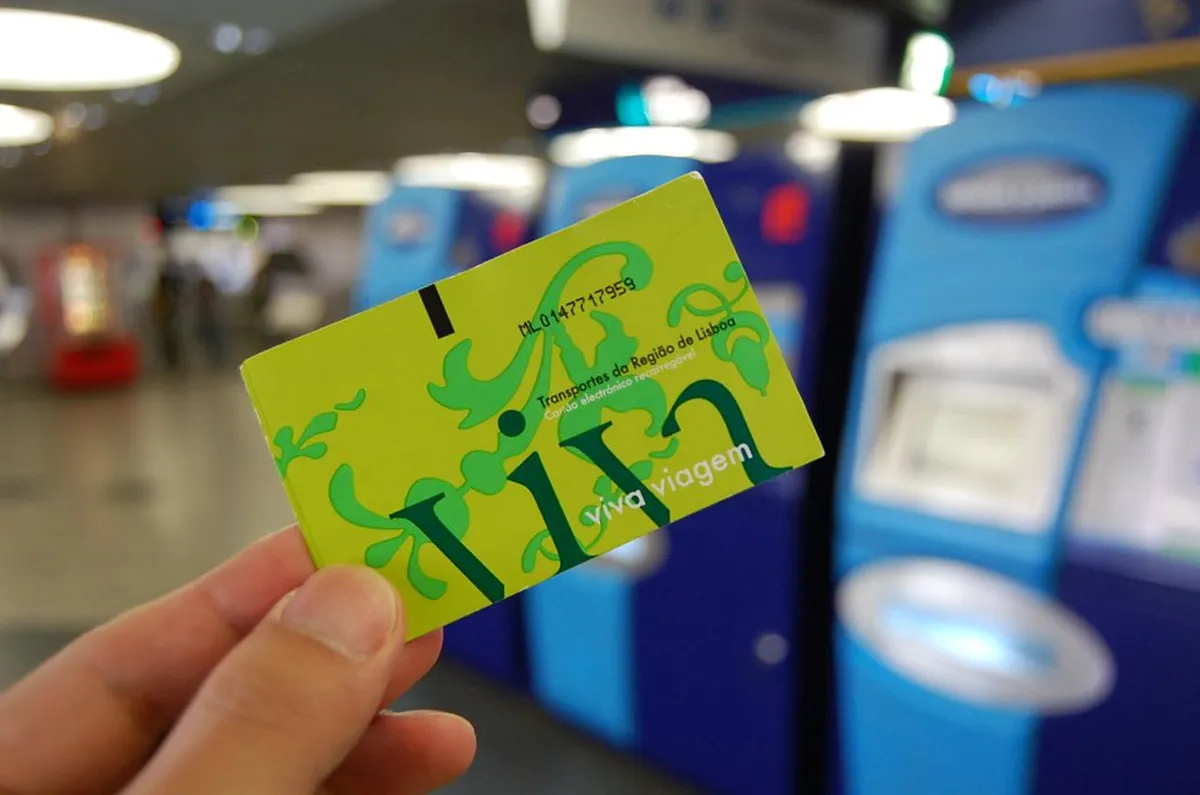
All metro journeys use the Andante card system. The card itself costs €0.60 and is rechargeable. It is personal — if you are traveling with three companions, each person needs their own card. You load a zone-based ticket onto the card: Z2 covers adjacent zones from your starting station, Z3 extends one ring further, and so on up to Z12. Most central-Porto journeys fall within Z2 or Z3. You can buy and top up Andante cards at ticket machines in every station, the airport post office (daily 08:00–23:00), and the Loja da Mobilidade at Rua Clube dos Fenianos 25 (Mon–Fri 09:00–17:30).
For tourists, the three most useful ticket types are: the Andante Azul (single-trip paper ticket, Z2 starts at €1.20, Z3 at €1.60 — buying 10 at once gets you one free); the Andante 24 (unlimited travel within your chosen zone for 24 hours from first validation — useful for day-trip-heavy itineraries); and the Andante Tour (24h or 72h unlimited travel on metro, STCP buses, and some regional trains — the 24h version is roughly €7.00 and the 72h version around €15.00, prices current 2026). The Andante card is not valid on the historic trams or the Guindais Funicular — those have separate ticketing.
The practical boarding sequence is simple. First, buy and load your Andante card at the station machine. Then tap the card on a yellow validation machine on the platform before you board. Sit anywhere you like; there are no reserved zones. When you change lines, validate again at the new platform. When you exit, there is no need to tap out. Keep the card — it is rechargeable and remains valid for future trips or a return visit to Porto.
| Ticket Type | Coverage | Price (2026) | Best For |
|---|---|---|---|
| Andante card (card fee) | n/a (rechargeable card) | €0.60 | Every visitor — required to load any ticket |
| Andante Azul Z2 | 2 adjacent zones, single trip | €1.20 | Short hops in the city center |
| Andante Azul Z3 | 3 zones, single trip | €1.60 | Airport or Gaia journeys |
| Andante 24 | Unlimited within chosen zone, 24 hours | Varies by zone | Day-trip-heavy itineraries |
| Andante Tour 24h | Unlimited metro, STCP buses, some trains, 24 hours | ~€7.00 | Full-day explorers |
| Andante Tour 72h | Unlimited metro, STCP buses, some trains, 72 hours | ~€15.00 | 3-day city breaks |
Porto Tram Lines: The Heritage Eléctrico Network
Porto's historic trams — the Eléctrico — are not integrated into the Andante public transport system. They are a separate heritage attraction operated by STCP, with their own fares and ticketing. A single ride costs €6.00; a return (or two journeys in one day) costs €8.00. A two-day unlimited tram pass costs €12.00 (€6.00 for children), though it rarely offers value given that only two of three lines are currently running. Tickets are bought from the conductor or at the tram stop, not with your Andante card.
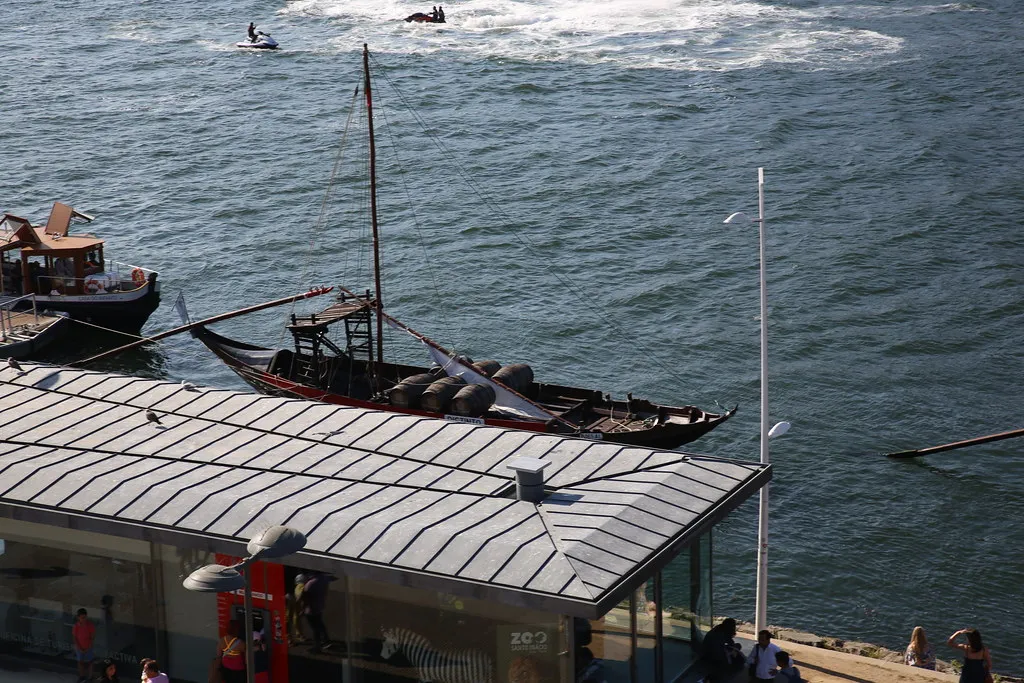
Of the three historic lines, Linha 1 is the most famous and the one worth prioritizing. It departs from Infante, follows the Douro riverbank west, and terminates at Passeio Alegre in the Foz district. The journey takes around 20 minutes each way and the tram trundles past the Igreja de São Francisco and under the Ponte da Arrábida. Trains run every 20 minutes at peak times. The 500 bus covers the same route for just €1.95 if queues are long, but the tram experience is considerably more atmospheric.
Linha 22 departs from Batalha and performs a one-directional loop through the historic center, passing the Santo Ildefonso church and connecting to the Carmo area. The full loop takes around 30 minutes, though traffic and illegally parked cars can add time. This is the better starter tram for first-time visitors who want a city-center overview without committing to a longer out-and-back trip.
Linha 18 is currently suspended as of 2026 due to ongoing metro construction works along its route. The full section from Museu do Carro Elétrico to Carmo is closed with no confirmed reopening date. If you were planning to visit the Museu do Carro Elétrico (the tram museum near Massarelos), verify the current status before you go — it has been affected by the same works. For the riverside and historic center tram experience, Linha 1 and Linha 22 are your only operating options in 2026.
Tram Linha 18 is suspended in 2026 due to metro construction works — the section from Museu do Carro Elétrico to Carmo is fully closed with no confirmed reopening date. Only Linha 1 (Douro riverside to Foz) and Linha 22 (historic center loop) are currently running.
How to Plan a Smooth Porto Transport Day
A successful day in Porto starts with grouping your visits by neighborhood to cut travel time. The metro covers most districts, but the historic center between Ribeira and Clérigos is compact enough to walk — and often faster on foot than waiting for a bus. Use the metro for longer hops: airport arrivals, Matosinhos beach, and the Gaia port wine cellars all justify a metro ride. Save the tram for a dedicated Linha 1 sunset run toward Foz.
If you are arriving from Lisbon by train, your intercity service arrives at Campanhã station. From there, Line C gets you to Trindade in around eight minutes. São Bento station — the ornamental azulejo-covered hall many visitors want to see — is a short walk from Aliados metro. It is a suburban rail station, not a metro stop, so the quickest approach is metro to Aliados plus five minutes on foot. Check our Porto neighborhoods guide to map which district each attraction sits in before building your daily route.
Use the official Metro do Porto app or Google Maps for real-time departures. Off-peak travel (before 07:30 and after 10:00 in the morning, and after 20:00 in the evening) is noticeably quieter and much more comfortable for families with strollers or travelers with luggage. Buses operated by STCP act as a reliable fallback if a metro line is undergoing maintenance; the same Andante card and zone logic applies.
Common Questions About the Metro of Porto
Many travelers ask about luggage on the metro. There is no extra charge for bags or suitcases, but avoid the peak commute windows (07:30–09:30 and 17:30–19:30) when carriages are crowded. Luggage lockers are available at Trindade and São Bento stations for day storage — useful if you need to check out of accommodation before an afternoon flight.
Bicycles are permitted on the metro during off-peak hours. Use the designated doors at the ends of each carriage, keep the bike clear of the central aisle, and yield to passengers boarding and alighting. This works well for exploring the coastal paths near Matosinhos or Foz, where you can combine metro and cycling in one trip. Surfboards follow the same rules as bikes.
Choosing where to stay in Porto matters for metro access. Accommodation near Trindade, Aliados, or Bolhão stations gives you direct access to all six lines and keeps you within walking distance of the main attractions. These neighborhoods are central, safe at night, and well-served by late-night metro runs on weekends. The metro runs until around 01:00 on weekdays and later on Friday and Saturday nights.
Parking near metro stations is available through designated park-and-ride lots at suburban stations like Francos, Câmara de Matosinhos, and Póvoa de Varzim. These are free or very low cost and well-suited for visitors who have rented a car but want to avoid driving into the city center.
Accessibility and Passenger Experience
Porto has made the metro highly accessible for travelers with limited mobility. Every station features elevators and ramps alongside the escalators, and the train floors are level with the platform edge for step-free wheelchair boarding. Staff at larger stations like Trindade and Campanhã are trained to assist passengers who need help. Visual and audio stop announcements run on every train, making the system easy to navigate without Portuguese.
The historic trams are not accessible for wheelchair users. The high entry steps, narrow interior, and cobbled boarding areas are genuine barriers. If accessibility is a priority, the 500 bus along the Linha 1 corridor is the practical alternative for reaching Foz. The funicular at Guindais also has step-free access at the top, though the lower entrance involves steps; check current conditions before relying on it.
Air conditioning on metro trains makes summer travel comfortable, which matters between June and September when temperatures regularly exceed 30°C. The overall system is clean, reliably on schedule, and one of the more pleasant metro networks in southern Europe. Off-peak carriages are quiet enough to read or work, which long-stay visitors appreciate when commuting between neighborhoods.
For the wider city context, see our complete Porto attractions guide.
For official references, see Metro do Porto and Porto City Hall.
Frequently Asked Questions
How to use the metro of Porto?
To use the metro, first purchase an Andante card at a vending machine. You must load it with the correct zone for your destination. Always validate the card by tapping the yellow machine before boarding the train. For more details on city zones, see our Porto neighborhoods guide.
Can I take the subway of Porto to the airport?
Yes, Line E (Violet Line) connects the city center directly to Porto Airport. The journey from Trindade station takes approximately 30 minutes. Trains run every 20 to 30 minutes depending on the time of day. It is the most affordable way to reach the airport.
Are there lockers on the metro stations?
Lockers are available at major hubs like Trindade and Sao Bento stations. These are perfect for storing luggage while you explore the city for a few hours. Prices vary based on the size of the locker and the duration of use. Ensure you have small change or a card for payment.
What ticket should you buy to use the metro of Porto?
Most tourists should buy the rechargeable Andante Azul card for individual trips. If you plan to travel extensively, the Andante Tour card offers unlimited rides for 24 or 72 hours. The Tour card is often the best value for a short, busy visit. Always check your zone before buying.
Can I transport animals or bikes on the metro?
Small animals in carriers are allowed at any time on the metro. Larger dogs must be muzzled and kept on a short lead. Bicycles are permitted during off-peak hours and must be placed in the designated areas. Always be mindful of other passengers when traveling with pets or bikes.
Mastering Porto's public transport comes down to three things: get your Andante card loaded before you need it, validate before every single journey, and know which tram lines are actually running. In 2026, Linha 1 along the riverside and Linha 22 through the historic center are the two operating heritage tram routes — Linha 18 remains suspended. The metro handles everything else with speed and reliability.
Remember to always validate your ticket and keep your Andante card for future use. The system is designed to be user-friendly and accessible for every type of traveler. If you are planning your time in the city, a Porto 3-day itinerary pairs well with this transport guide to structure your days by neighborhood. Public transport is not just a utility here — the Linha 1 tram rattling along the Douro is genuinely one of Porto's best slow experiences.
For related Porto deep-dives, see our Porto airport transfer guide and Porto neighborhoods guide.