
16 Best Porto Rainy Day Things to Do (2026)
Don't let the rain stop you. Discover 16 top things to do in Porto when it rains, from wine cellars and fado to hidden architectural gems and cozy cafés.
On this page
16 Best Porto Rainy Day Things to Do (2026)
I remember my first rainy afternoon in the Ribeira district when the granite streets turned into shimmering mirrors. While many travelers hide in their hotels, I found that Porto actually feels more authentic under a grey sky. The city's melancholy charm, known locally as saudade, truly comes alive when you are tucked into a cozy cellar or listening to a fado singer in a candlelit room. Our team has navigated these hills in every season to bring you this updated guide for 2026.
Porto sees roughly 150 rainy days a year, with the heaviest bursts arriving between November and March. Having a solid indoor plan is essential for any itinerary here. Check the Porto weather by month to see what to expect during your specific dates. The sixteen activities below are grouped by type so you can choose based on your mood and location in the city.
Rainy Days in Porto: An Overview and Practical Tips
The rain in Northern Portugal rarely stays for the entire day, arriving in short, intense Atlantic bursts. Granite paving stones become dangerously slippery when wet, so leave smooth-soled shoes at home and wear proper waterproof boots. Pack a sturdy windproof umbrella — the cheap plastic ones from souvenir shops last about five minutes near the riverfront. Quality options are available at Casa Lima on Rua de Santa Catarina 231 or at Decathlon on Rua de Fernandes Tomás 508.
If you plan on visiting multiple museums, the Porto Card delivers serious value during wet weather. The 2-day card (around 13 EUR) covers free entry to seven museums, unlimited metro and bus travel, and a 50% discount on Port wine cellar visits. It means you can move between indoor sites entirely underground or by bus without standing in wet queues. Most major attractions now require online booking, so reserve slots before you arrive.
For those who prefer a central base, see our Porto neighborhoods guide to find accommodation near the metro. Staying near Bolhão or Aliados puts you within a few minutes of the underground system, the highest density of covered shopping galleries, and the best historic cafés. A short plan the night before transforms an unexpected downpour from a disappointment into the best part of your trip.
A few things are worth avoiding when it rains hard: climbing the Clérigos Tower (cold, exposed, and windy at the top), walking the upper deck of the Luiz I Bridge, and going near Felgueiras Lighthouse in Foz where Atlantic waves can be genuinely dangerous. River cruises are technically possible but foggy windows ruin the scenery. Save all of these for a dry day.
The Porto Card (2-day card around 13 EUR) covers free entry to seven museums, unlimited metro and bus travel, and a 50% discount on Port wine cellar visits — strong value on a rainy day when you are moving between indoor sites.
Visit a Wine Cellar and Savor Porto's Famous Port Wine
Crossing the Dom Luís I Bridge to Vila Nova de Gaia for a Port wine lodge tour is the single best rainy afternoon in Porto. You step inside a barrel-lined cellar, learn about aging and blending, and end with a proper tasting — all while the rain drums on the lodge roof above you. Prices typically start at 20 EUR per person for an entry-level guided tour and tasting.
Graham's Lodge is widely considered the best-structured tour, with knowledgeable guides and a tasting room that overlooks the Dom Luís I Bridge. Taylor's is one of the oldest Port houses in the world and offers self-guided tours followed by tastings on their terrace. For families, Calém combines an interactive museum with a Fado show option — book the tasting-plus-Fado package for a two-in-one indoor afternoon. The Porto port wine cellars guide has the full comparison of all major lodges with updated opening hours.
If you would rather stay in central Porto without crossing to Gaia, the World of Wine (WOW) complex on the Gaia waterfront offers seven museums under one interconnected roof — covering wine, chocolate, cork, and Portuguese fashion. Online tickets for the full WOW complex including two tastings cost around 30 EUR and the complex stays open until 22:00 most nights, making it a strong half-day or full-evening option.
Step Inside the Majestic Palácio da Bolsa
The 19th-century Stock Exchange Palace is Porto's most opulent indoor landmark, and it earns that reputation the moment you enter the glass-domed atrium. Guided tours are mandatory — you cannot wander alone — and run daily from 09:00 to 18:30 in 2026. Adults pay 14 EUR; seniors and students with valid ID pay 9.50 EUR; children under 12 are free.
The highlight is the Arabian Room, a jaw-dropping hall of Moorish-inspired plasterwork that took 18 years to complete and draws direct comparison to the Alhambra in Granada. On rainy days the tours sell out 2 to 3 hours in advance — book the first slot of the day online to guarantee entry and enjoy the halls before the crowds arrive. The palace sits directly next to the Igreja de São Francisco, so you can chain both into a dry one-hour back-to-back visit.
Marvel at the Stunning Azulejos of São Bento Railway Station
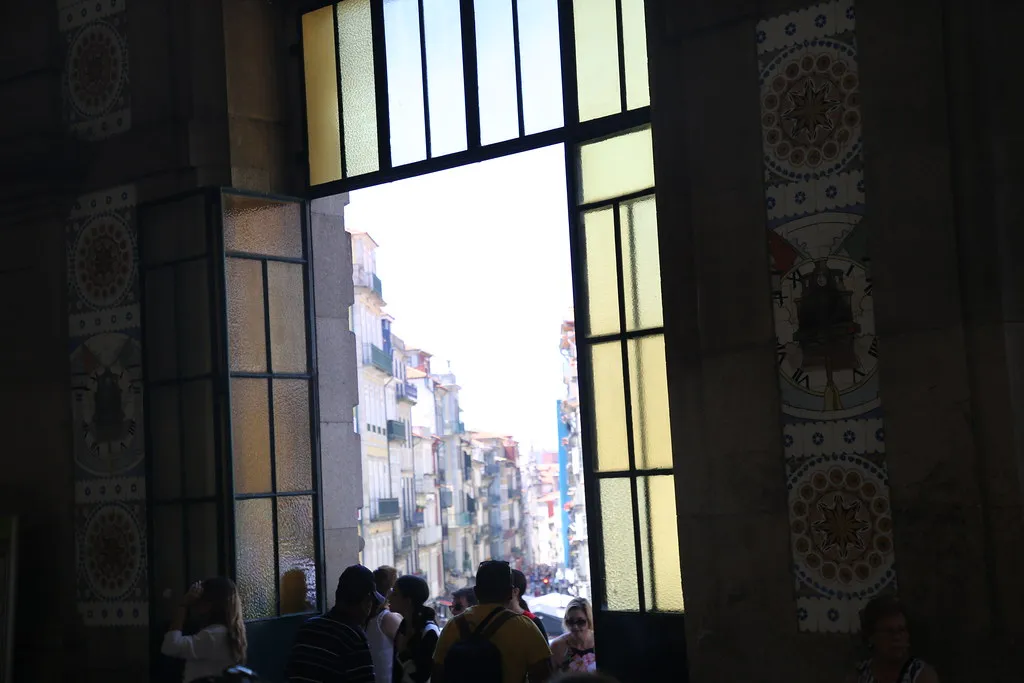
Even if you have no train to catch, São Bento station is worth 30 minutes of careful study. The main vestibule is lined with 20,000 blue-and-white azulejo tiles painted by Jorge Colaço between 1905 and 1916. Entry is free and the hall is open around the clock. Most visitors glance at the tiles and move on — slow down and you will discover an entire history lesson on the walls.
The panels tell specific stories: the Battle of Valdevez (1140), the Conquest of Ceuta (1415), and the triumphant entry of King João I into Porto. The lower registers show rural scenes of harvesting, fishing, and ox-cart transport — a documentary of Portuguese daily life that no history textbook covers in such detail. Arrive early in the morning before the tour groups fill the hall, stand near the back wall, and work your way left to right to follow the chronological narrative. It is genuinely one of the most underestimated things to do in Porto for free.
Experience World-Class Music and Architecture at Casa da Música
Rem Koolhaas designed this angular concrete building in 2005, and it remains one of the most discussed pieces of contemporary architecture in Europe. Guided architecture tours run twice daily at 11:00 and 16:00, last about 90 minutes, and cost around 11 EUR per person. The tour takes you through rehearsal halls, backstage corridors, and the main auditorium — spaces that most concert visitors never see. It is a genuinely dry, intellectually stimulating way to spend a wet morning.
If a performance coincides with your visit, check the schedule on the Casa da Música website. Ticket prices vary widely, from around 10 EUR for chamber music to 45 EUR for headline orchestral nights. The building's indoor café on the upper floor has floor-to-ceiling windows overlooking the Rotunda da Boavista, making it a fine place to wait out a heavy shower even if you skip the tour.
Wander through the Vibrant Mercado do Bolhão
The historic Bolhão Market reopened in 2022 after a full renovation and the new wrought-iron and glass structure is almost entirely covered. The stalls run from 08:00 to 20:00 on weekdays and until 13:00 on Saturdays; entry is free. You will find local cheeses, cured meats, fresh bacalhau, and regional wines under one dry roof.
Head to the corner stalls near the ground-floor perimeter for a warm bolinho de bacalhau (salt cod fritter) eaten standing up — the classic Porto street snack. The upper mezzanine has a handful of small restaurants serving set lunches for around 12 EUR if you want to sit down. The market atmosphere is a genuine slice of daily Porto life that no museum can replicate, and the covered structure makes it one of the most pleasant spots in the city when it is raining outside.
Explore Porto's Cultural Treasures at These Must-Visit Museums
The Serralves Museum of Contemporary Art is the standout choice for art lovers. Designed by Pritzker Prize winner Álvaro Siza Vieira, the minimalist white building hosts rotating international exhibitions of real quality. In 2026 the combined museum, villa, and park ticket costs 24 EUR; children under 10 enter free and visitors over 65 pay half price. Allocate at least two hours inside the galleries alone. The park is beautiful too but save it for a dry afternoon.
The Portuguese Centre of Photography, housed in a former 18th-century prison near the city centre, is free to enter and open Tuesday to Sunday until 18:00. The thick stone walls and heavy iron doors create an atmosphere that feels appropriate to the photographic archives inside — vintage cameras, darkroom equipment, and documentary prints spanning over a century. The Museu Nacional Soares dos Reis on Rua Dom Manuel II covers Portuguese fine art from the 16th to 19th centuries, with strong ceramics and sculpture collections; tickets cost around 5 EUR.
For families or football fans, the FC Porto Stadium Museum at Estádio do Dragão is a strong rainy-day option. Multimedia exhibits cover the club's history interactively, and you tour the stadium itself with a guide. Adult tickets are 25 EUR, children aged 5 to 12 pay 13 EUR, and under-5s enter free. Book online to avoid the counter queues.
| Attraction | Adult Ticket | Concession / Child | Notes |
|---|---|---|---|
| Palácio da Bolsa (guided tour) | 14 EUR | 9.50 EUR (seniors/students); free under 12 | Mandatory guided tour; book in advance on rainy days |
| Igreja de São Francisco | ~10 EUR | — | Includes catacombs and museum |
| Serralves Museum + Park | 24 EUR | Free under 10; 50% over 65 | Pritzker Prize-winning building |
| FC Porto Stadium Museum | 25 EUR | 13 EUR (ages 5–12); free under 5 | Includes stadium tour; book online |
| Casa da Música (architecture tour) | ~11 EUR | — | Tours at 11:00 and 16:00 daily |
| Livraria Lello (Silver Ticket) | 8 EUR | — | Fee credited toward a book purchase |
| Porto Card (2-day) | ~13 EUR | — | Covers 7 museums + unlimited metro |
Discover Porto's Historic Churches and Majestic Cathedrals
The Igreja de São Francisco is Porto's most extravagant interior — roughly 300 kilograms of gold leaf covers the Baroque carvings that line every surface of the nave. Entry costs around 10 EUR and includes the catacombs and the small museum. Allow 45 minutes. The church sits next to Palácio da Bolsa on Rua do Infante Dom Henrique, making it natural to pair both in a single dry morning walk through the old town.
The Sé do Porto (Porto Cathedral) on Terreiro da Sé is Porto's oldest surviving building, parts of it dating to the 12th century. The Romanesque exterior is austere but the Gothic cloister is tiled with 18th-century azulejos depicting scenes from the life of Ovid — calmer and less crowded than São Bento. Entry to the cathedral is free; the cloister and treasury cost around 3 EUR combined.
For an evening activity, the Spiritus Multimedia Show takes place inside the Clérigos Church (not the tower). The 30-minute light-and-sound experience projects Fernando Pessoa's poetry across the church walls. Shows run at 17:30, 18:15, 19:00, 19:45, 20:30, and 21:15; tickets are 10 EUR for adults and free for children under 10. Arrive early and choose a back-row seat so you can see the full projection field without craning your neck.
Feel the Soul of Porto with a Live Fado Performance
Fado originated in Lisbon but Porto has its own thriving scene, and a rainy night is the ideal backdrop for this music. Fado — the word means "fate" — is built around saudade, a uniquely Portuguese feeling of longing that no direct translation captures. UNESCO added it to the Intangible Cultural Heritage list in 2011. Hearing it live in a small venue with 30 other people in a stone-walled room is an experience that sits with you long after you leave Portugal.
Ideal Clube de Fado is considered Porto's most authentic venue, run by Ricardo who keeps the performances rooted in traditional style. Tickets cost around 18 to 20 EUR per person. For a combined experience, book a guided wine tasting with Fado show at Calém Lodge in Gaia — the intimate cellar room where the performances take place is far cosier than the main tasting hall. Casa da Mariquinhas and Café Guarany are two other established venues worth checking for performance schedules during your visit dates.
Step Into the Magical World of Livraria Lello
Livraria Lello is genuinely one of the most beautiful bookstores in the world, and the crimson Art Nouveau staircase inside is worth the entry fee on its own. The store is open daily from 09:00 to 19:00 but requires a pre-booked time slot through their website. Three ticket tiers exist in 2026: the Silver Ticket (8 EUR) grants entry with the fee credited toward a book purchase; the Gold Ticket (15.95 EUR) includes a book and priority entry over Silver holders; the Platinum Ticket (50 EUR) adds a private tour with access to the upper Gemma Room.
On rainy days the queue on Rua das Carmelitas can stretch back significantly, so book the first available morning slot. Even arriving 20 minutes before your entry time gives you a calmer experience before the crowds peak. The bookstore stocks Portuguese and English titles, so there is a real chance of leaving with something worth reading.
Livraria Lello requires a pre-booked time slot from their website. The Silver Ticket (8 EUR) fee is credited toward a book purchase, so it effectively costs nothing if you buy something.
Indulge in Coffee and History at Porto's Iconic Cafés
Café Majestic on Rua Santa Catarina is Porto's most photographed café: carved wood panels, mirrored walls, and Belle Époque plasterwork that has not changed since 1921. A coffee costs around 6 EUR, which is steep by Porto standards, but the interior is a genuine architectural experience. Expect a wait of 15 to 30 minutes on rainy days when everyone in the city has the same idea. Open Monday to Saturday from 09:30.
Café Guarany on Avenida dos Aliados is the better choice if you want the history without the tourist queue. Also from the early 20th century, it hosts occasional live Fado sessions in the evenings and serves a strong galão (Portuguese latte) for under 2 EUR. The location on the main avenue puts you within easy walking distance of the metro at Aliados station. For something more contemporary, Fábrica Coffee Roasters on Rua de José Falcão 122 has a stunning tiled interior and excellent single-origin espresso.
Discover the Culinary Specialties of Porto
Rain is a legitimate excuse to eat well, and Porto's food is specifically designed for cold, wet days. The Francesinha is the city's signature dish: a stacked sandwich of ham, cured sausage, and steak, covered in melted cheese and drowned in a thick beer-and-tomato sauce. Every café does a slightly different version; most serve it for 10 to 14 EUR with fries. Café Majestic puts it on the menu, but the versions at smaller local tascos are often better and half the price.
For a quicker warm bite, bifana is Porto's street food answer to rain: a pork sandwich served with spicy gravy and optional caramelized onion, usually under 3 EUR. O Astro near Campanhã train station on Rua da Estação 16 is famous for the best Porto-style bifanas in the city. Conga at Rua do Bonjardim 314 is more central and equally well regarded. A bowl of Caldo Verde — the kale-and-chorizo soup of Northern Portugal — at almost any traditional restaurant rounds out a cold afternoon for around 5 EUR.
If you want a structured culinary experience, a pastel de nata cooking class runs around 30 EUR per person and lasts two hours in a warm kitchen environment. Most classes are in the city centre and include as many custard tarts as you can reasonably eat. See our Porto food tour guide for recommended operators and the best spots for each dish.
How to Get Around Porto in the Rain
Porto's metro is your best ally: it runs mostly underground in the city centre, keeping you completely dry between stops. Pick up a rechargeable Andante card at any station for 0.60 EUR and top it up as needed. The yellow line (D) is particularly useful for crossing to the Gaia wine cellars without any outdoor walking once you exit at João de Deus station. See our Porto metro and tram guide for a full map and fare breakdown.
Uber and Bolt both operate widely in Porto and a trip across the city centre typically runs 5 to 9 EUR — far cheaper than western European equivalents. During sudden thunderstorms demand spikes and wait times can double, so keep both apps installed and try the one with the shorter ETA. Taxis (with the traditional cream-and-blue livery) are also metered and reliable, though slightly pricier than the apps.
The historic Line 1 tram running along the river to Foz do Douro is charming and entirely enclosed, though draughty when the wind picks up. A single trip costs around 6 EUR from the driver. It is more of a scenic experience than a transport workhorse — use it on a light rain day rather than a downpour. For the full hop between indoor sites, the metro plus occasional Bolt is the fastest and driest combination.
Final Thoughts on Your Rainy Day in Porto
Porto wears its rain well. The city has 900 years of Atlantic weather experience and the indoor culture to match: world-class wine lodges, extraordinary tilework, intimate fado venues, and some of the finest historic cafés in Europe. A wet day here is not a consolation prize — for many travelers it turns out to be the trip highlight.
The key to a good rainy day is sequencing. Start underground with São Bento and Palácio da Bolsa in the morning, cross to Gaia on the metro for wine and a fado show in the afternoon, and end with a Francesinha and a Clérigos Spiritus show in the evening. Book the advance-ticket venues (Livraria Lello, Palácio da Bolsa, fado, Spiritus) at least 48 hours ahead, especially between November and March when indoor Porto fills quickly. With the Porto Card covering transport and museum entries, a full rainy day costs far less than you might expect.
For official references, see Casa da Música and Serralves Museum.
Frequently Asked Questions
What is the best indoor activity for kids in Porto?
SEA Life Porto is the top choice for families. It features a large underwater tunnel and interactive exhibits that keep children entertained for hours. The facility is entirely indoors and located near Matosinhos.
Is the Porto Card worth it for a rainy weekend?
Yes, the Porto Card is highly beneficial during wet weather. It provides free entry to several museums and unlimited use of the metro and buses. This allows you to travel between indoor sites without getting wet.
Do I need to book the Port wine cellars in advance?
You should definitely book wine cellar tours in advance, especially on rainy days. These indoor tours are very popular when the weather is poor. Most lodges like Calém or Graham's offer easy online reservation systems.
Porto is a city that wears its rain well, offering a wealth of cultural and culinary treasures behind its stone facades. From the golden carvings of São Francisco to the modern halls of WOW, you will never run out of indoor options. I hope this guide helps you navigate the wet weather with ease and discover the city's hidden charms. Remember to pack your boots, book your tickets early, and enjoy the unique atmosphere of a rainy day in Portugal.
For related Porto deep-dives, see our Porto on a budget and Porto neighborhoods guide.
 10 Best Things to Do in Braga with Kids (2026)June 4, 2026
 12 Best Free Things to Do in Braga (2026)June 4, 2026